Design Philosophy
Design as Experience
“A meaningful interface is not only used — it is experienced.”
I believe digital products should be experienced, not merely used. An interface is more than a functional system—it is a space where people interact, explore, and construct meaning through their actions.
This perspective is influenced by the philosophy of John Dewey, particularly his concept of Art as Experience. Dewey argued that art does not exist solely as an object but emerges through the experience of those who encounter it.
“The work of art is complete only as it works in the experience of others.” — John Dewey
In a similar way, digital interfaces become meaningful only when users actively engage with them. Design therefore shapes not only usability, but also the quality of the experience itself.
A meaningful interface is not only used — it is experienced.
✳︎
Design as Experience
✳︎
The work of art is complete only as it works in the expeience of others.
✳︎
A meaningful interface is not only used — it is experienced. ✳︎ Design as Experience ✳︎ The work of art is complete only as it works in the expeience of others. ✳︎
Experience Through Interaction
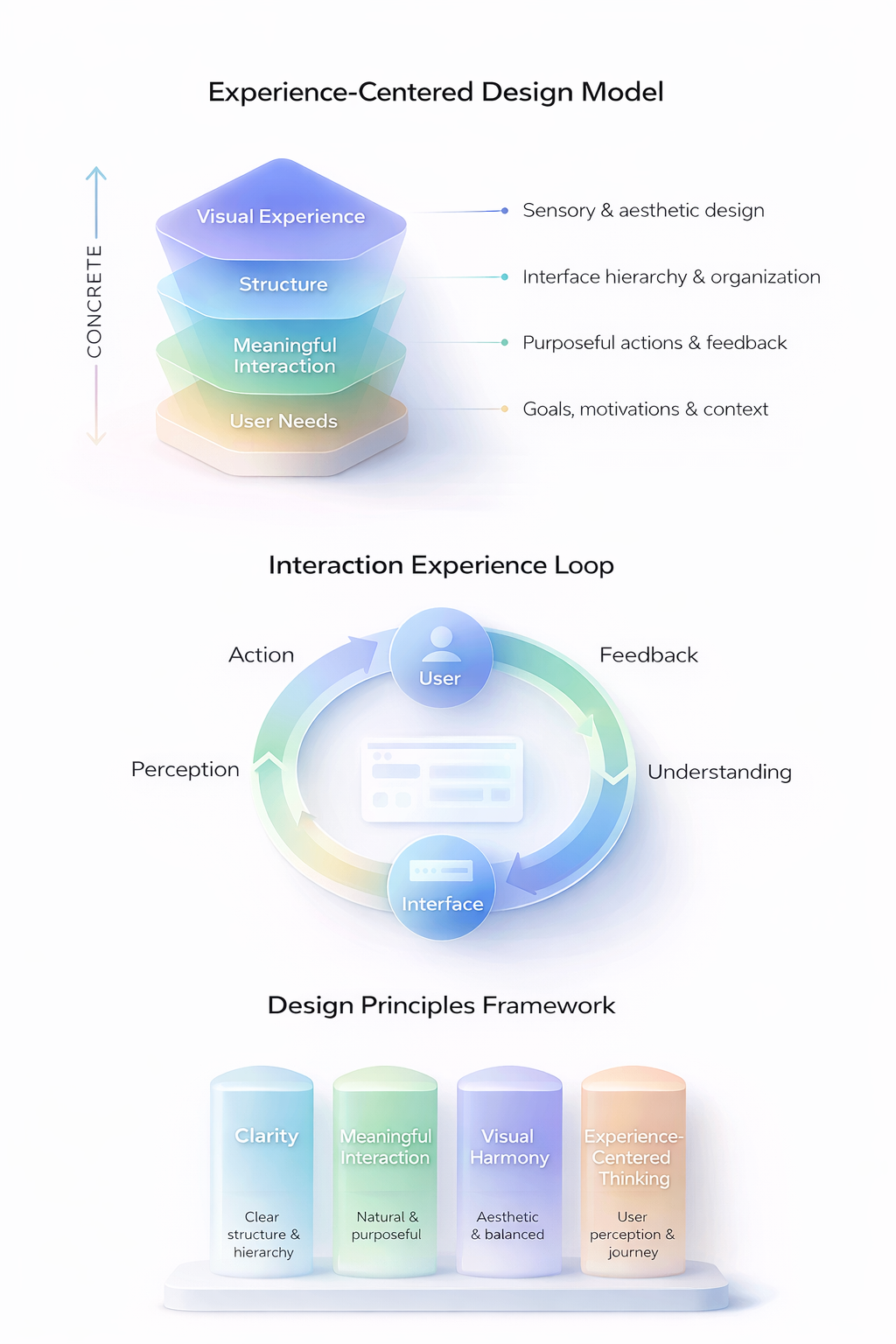
Dewey described experience as the unity of doing and undergoing—the relationship between action and perception. This idea closely resonates with interaction design, where user actions and system responses continuously shape the overall experience.
A well-designed interface does more than present information. It guides attention, supports understanding, and creates a natural rhythm between interaction and feedback.
When structure, interaction, and visual clarity work together, complex systems can transform into experiences that feel intuitive, coherent, and meaningful.
From Function to Meaning
For me, design is not only about solving functional problems. It is also about shaping how people perceive, understand, and emotionally engage with digital environments.
Principles such as balance, hierarchy, rhythm, and visual harmony—long explored in aesthetics and art theory—play an important role in creating interfaces that feel both intuitive and engaging.
Good design emerges when clarity of structure and quality of experience work together.
Design Philosophy in Practice
In my work, this philosophy translates into several guiding principles:
Clarity
Simplifying complexity through clear structure and thoughtful hierarchy.
Meaningful Interaction
Designing interactions that feel natural, responsive, and purposeful.
Visual Harmony
Applying aesthetic principles to support usability and emotional tone.
Experience-Centered Thinking
Focusing on how users perceive, navigate, and understand digital environments.
Through this approach, I aim to design digital products that are not only functional, but also intuitive, engaging, and meaningful to experience.

“Experience occurs continuously, because the interaction of live creature and environing conditions is involved in the very process of living.”
—John Dewey